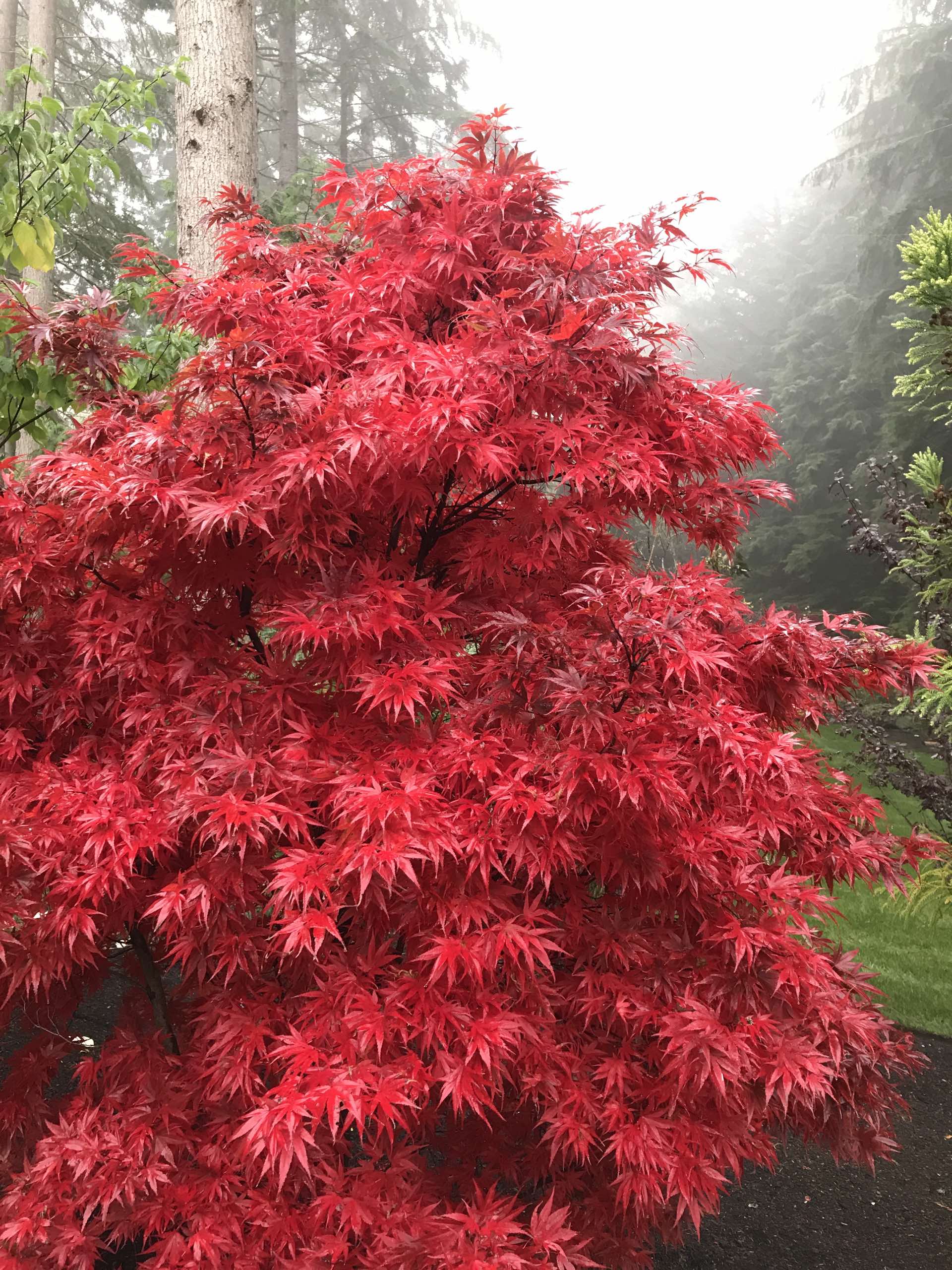
Seed-grown Japanese maple in brilliant red autumn color against misty Pacific Northwest conifers

Seed-Grown Japanese Maples · Pacific Northwest

A hand-grown piece of future art.

Form & Foliage is a small specialty nursery growing Japanese maples from seed for gardeners who want something more personal than standard nursery stock. Our plants provide beauty, individuality, and the kind of long-term presence that makes a garden more rewarding year after year.

A more personal way to choose a plant

Seed-grown maples, each with its own character

Almost all Japanese Maples you see, in nurseries, in landscapes, in neighborhood gardens, are grafted clones. Every tree of a named variety is genetically identical to every other; beautiful and consistent, but not unique. We take a different approach: we grow our maples from seed. Each one develops as a true individual — its leaf shape, branching habit, seasonal color, and growth rate are entirely its own.

We grow our plants here in the Pacific Northwest and focus on trees and ornamentals that feel at home in Northwest gardens. We are small by design, which lets us give more attention to each plant and help match the right plant to the right place.

01

Your garden gets something no one else has

Every seed-grown maple is genetically unique. Its form, color, and seasonal expression develop in its own way over time. If you want a garden that feels personal rather than formulaic, that difference matters.

02

Already at home in the Pacific Northwest

Our plants are raised in Pacific Northwest conditions from the start. For local gardeners, that means plants grown with this climate in mind — not something shipped in and expected to adjust later.

03

Choose for the long term, not just the moment

Some plants are bought for instant effect. Ours are meant to become more beautiful as they settle in and mature. If you enjoy gardening as a lasting process, these are plants you can live with and appreciate for years.

The Plants

Many of our plants are available in small numbers, and some are truly one-offs. That is intentional — it gives you a better chance of finding something with character, rather than picking from a lineup of lookalikes. Join the interest list or visit us in person to see what is available.

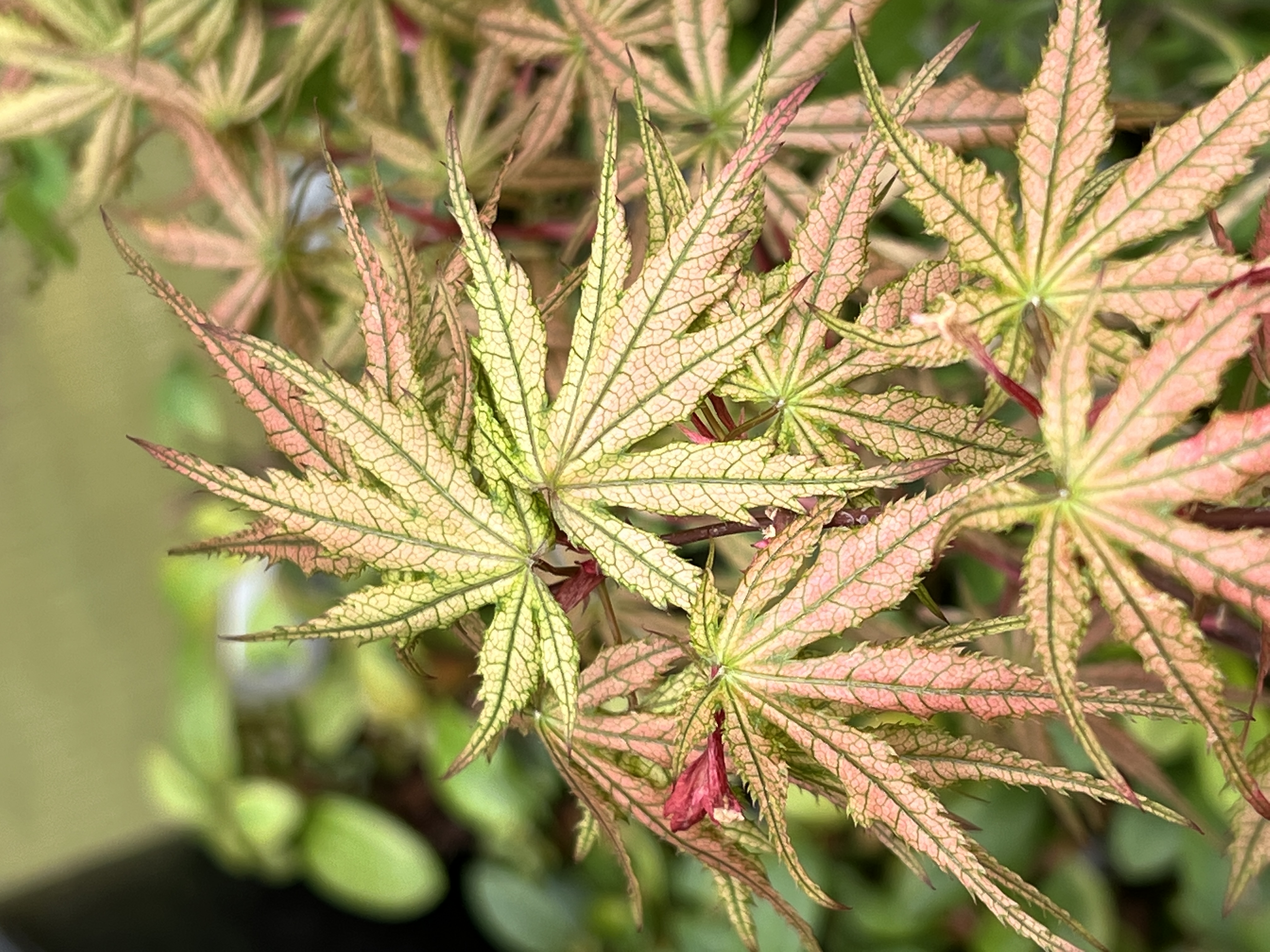
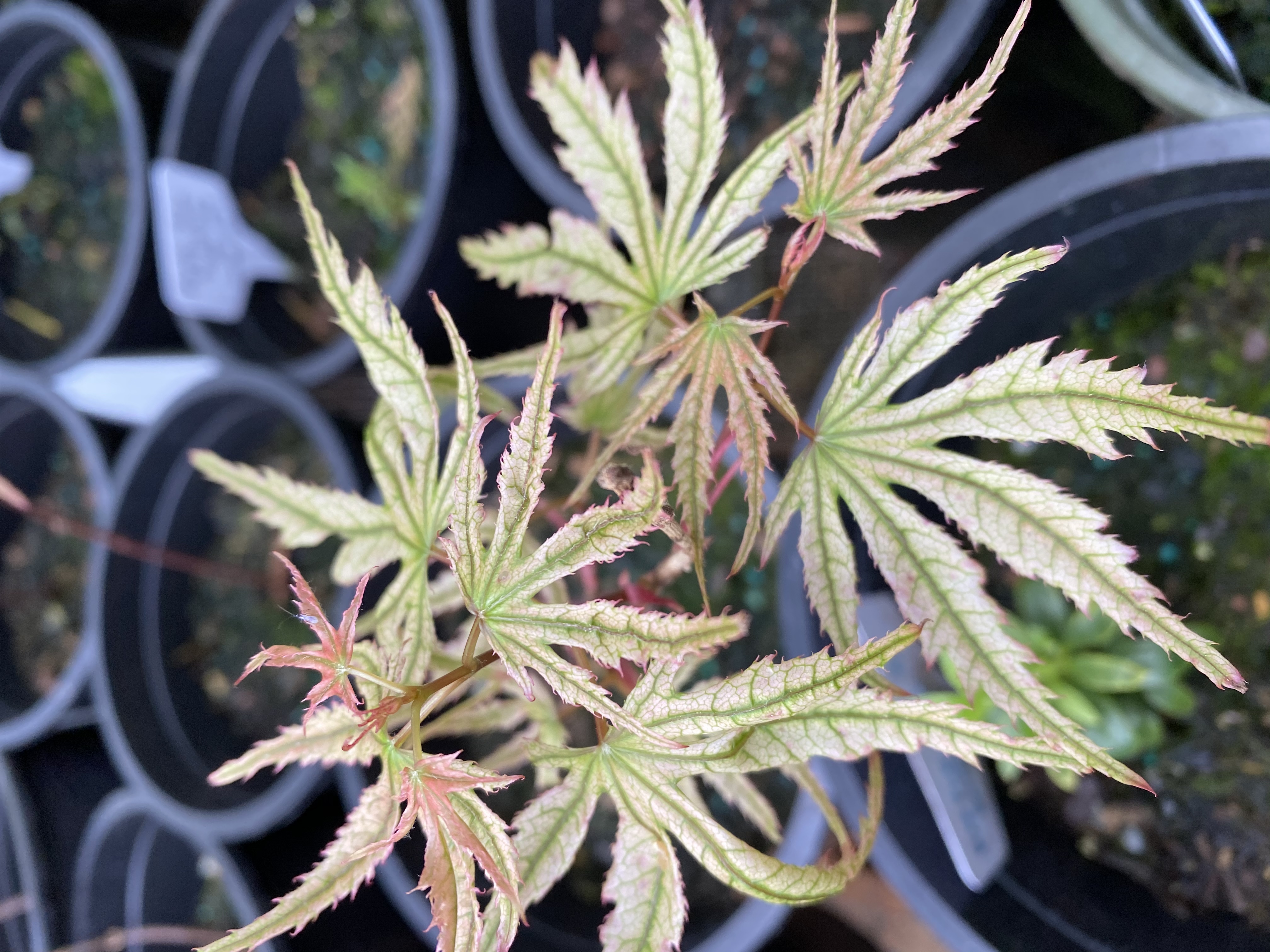
Variegated Japanese maple with pink, cream, and green reticulated foliage

Seed-Grown · Acer palmatum

Variegated & Reticulated Forms

Each leaf a living watercolor of cream, blush, and green that no artist could replicate. These are the maples that stop people mid-stride. Every plant finds its own palette over the years.

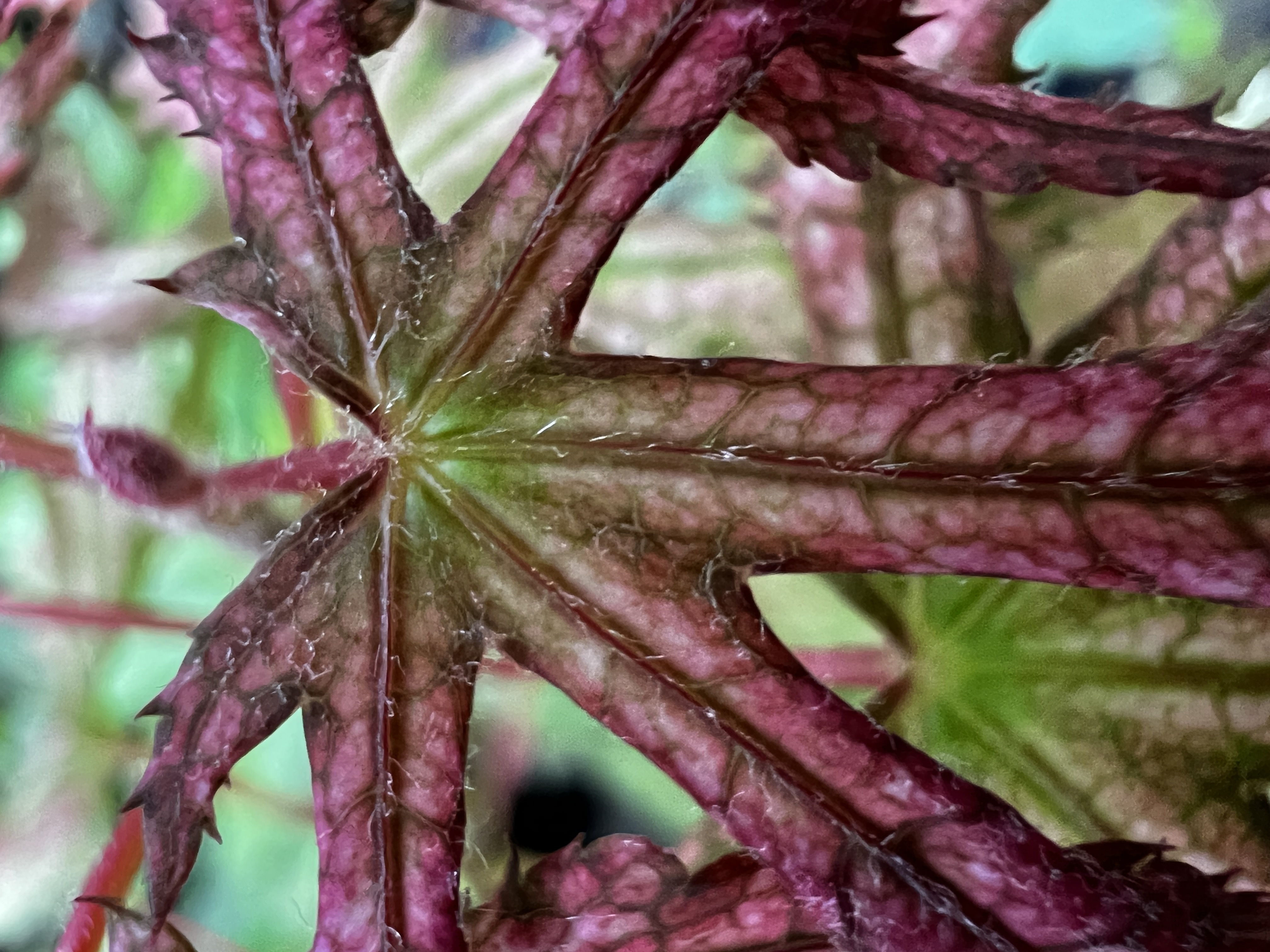
Extreme close-up of deeply lobed Japanese maple leaf showing crimson veining and texture

Seed-Grown · Acer palmatum

Deeply Lobed Red Forms

Veins radiating like spokes, textures that catch light differently in every season. These bold-lobed reds become living sculpture — all year, every year, for as long as your garden exists.

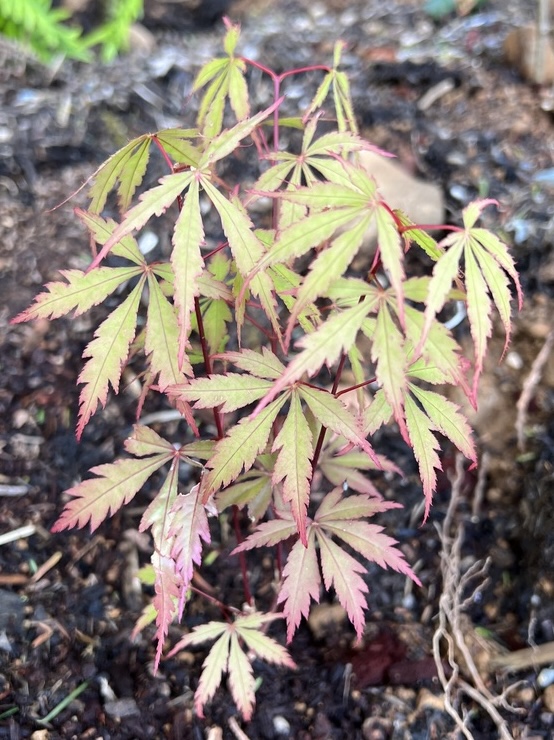
Young green Japanese maple seedling with pink-blushed, deeply lobed leaves

Seed-Grown · Young Stock

Young Specimens

Start with something small and watch it become something extraordinary. The most rewarding way to grow a garden.

Cream and chartreuse Japanese maple with pink-edged foliage in nursery pots

Seed-Grown · Acer palmatum

Green & Cream Forms

Cooler, more restrained palettes that reward shade — delicate cream and chartreuse that glow against darker plantings and come alive in diffused PNW light.

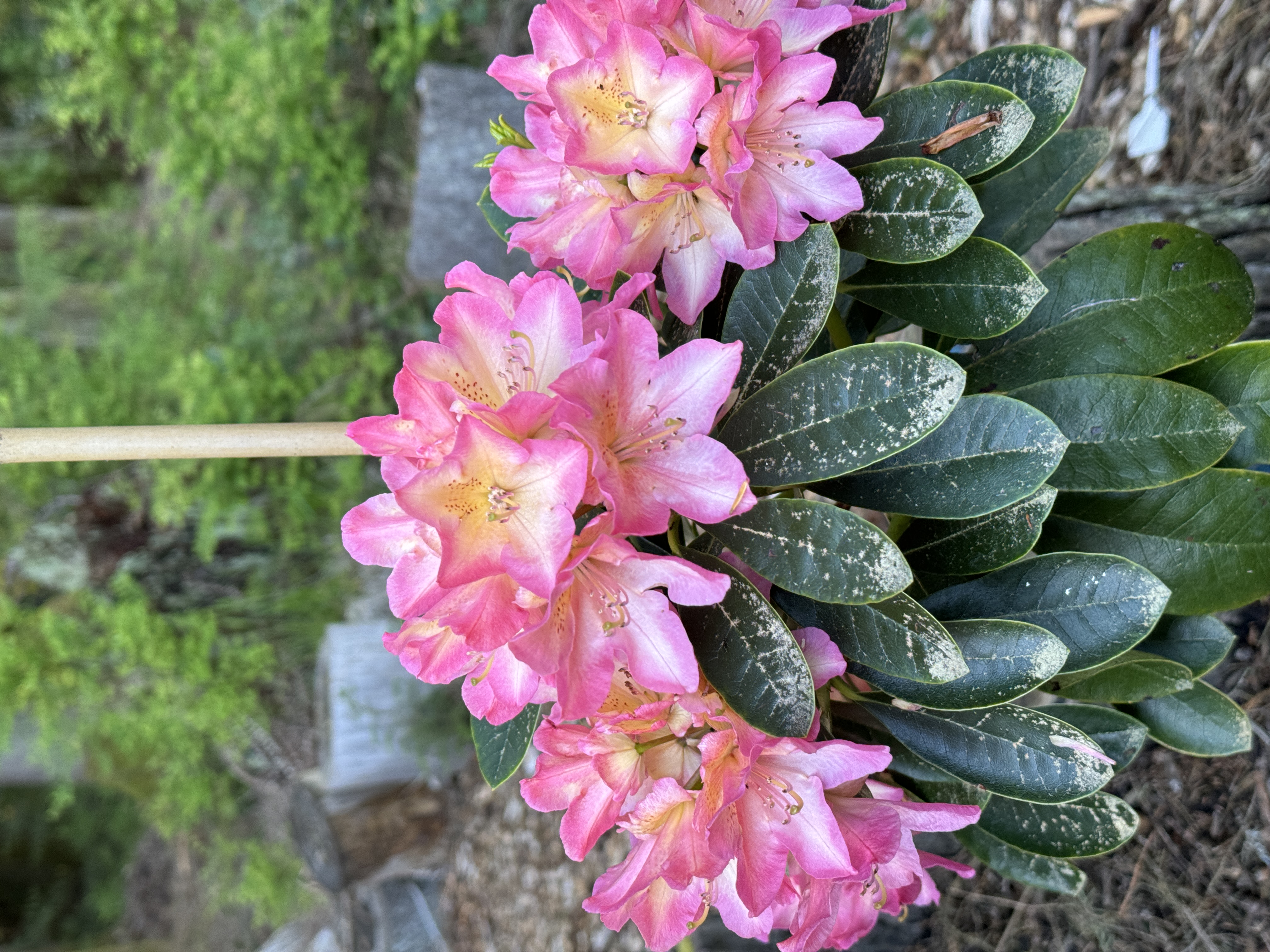
Hand-propagated rhododendron with vibrant pink blooms and glossy leaves

Hand-Propagated · Specialty

Specialty Ornamentals

Beyond maples — hand-selected plants chosen for exceptional form, bloom, and long-term presence in Pacific Northwest gardens.

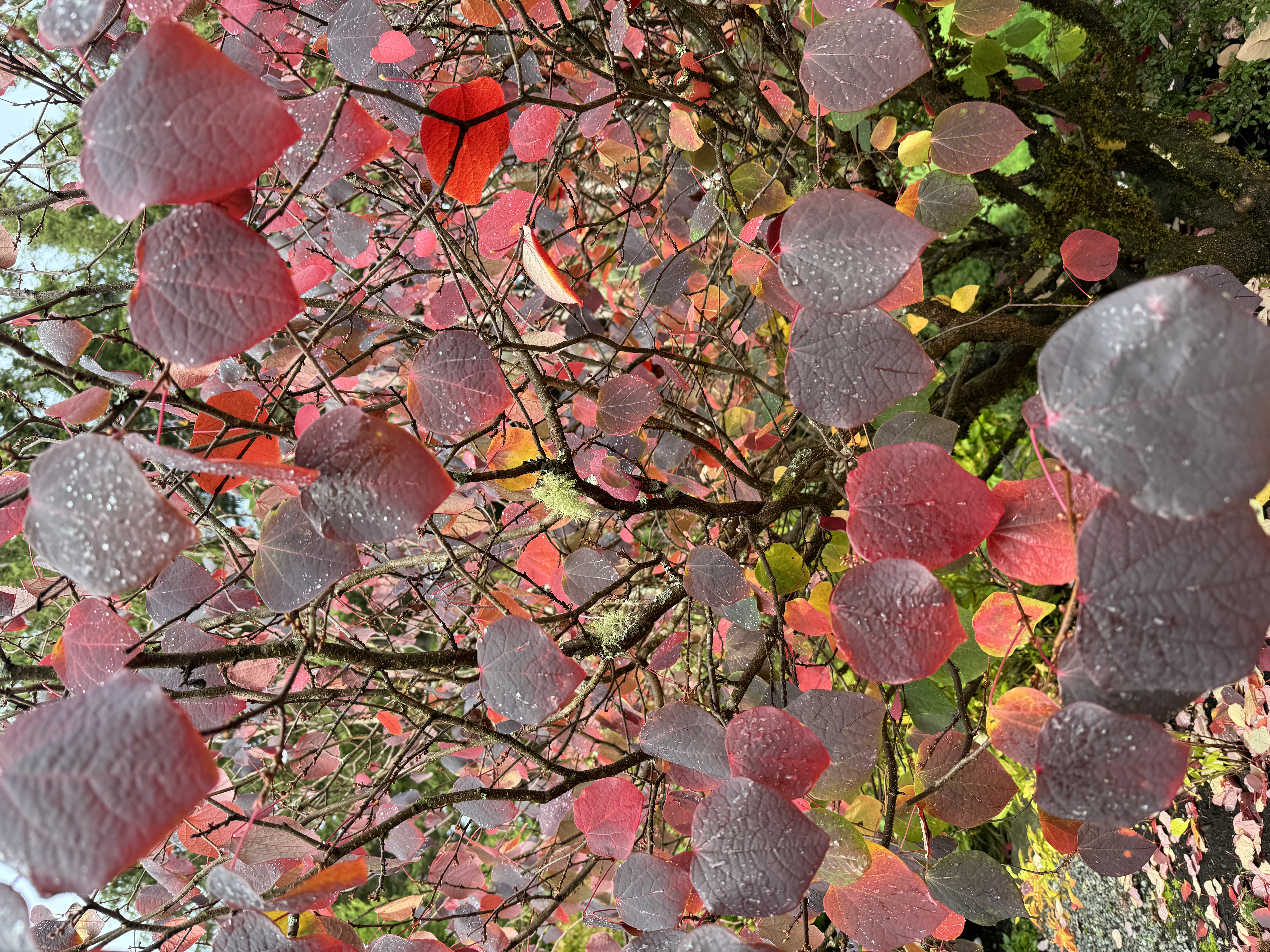
Specialty broadleaf tree in peak autumn color with morning rain

Form & Foliage Gardens

Our Story

Form & Foliage grew out of years spent gardening, landscaping, and falling in love with the ornamental plants that give a garden its structure, character, and lasting beauty. What began as a personal fascination with Japanese maples and other distinctive plants gradually became a nursery shaped by that same way of seeing gardens: slowly, thoughtfully, and with an eye for plants whose form, color, and seasonal change make them feel almost like living works of art.

Based in the Pacific Northwest, we grow seed-grown Japanese maples and offer a small selection of ornamental plants chosen for beauty, individuality, and long-term garden presence. We are drawn to plants that feel expressive in form and foliage, at home in Northwest gardens, and rewarding to live with season after season.

Join the interest list →

Come see us in person

Where to
Find Us

Follow us on Instagram for day-of updates on what we'll have at each market.

Apr 24–25Fri & Sat, 10–4

Lake Wilderness Arboretum Spring Plant Sale

Lake Wilderness Arboretum — Maple Valley, WA

Details →
May 16Sat, 9–2

Friends of the Fall City Library Plant Sale

Fall City Library parking lot — Fall City, WA

Details →
Spring & FallVarious

PNW Plant Sales & Specialty Events

Puget Sound region — dates vary

Check Instagram

* Schedule updates throughout the season. Follow @formfoliagegardens for the latest.

Let's find your plant

Looking for something specific?

If you are searching for a particular color range, leaf shape, size, or garden effect, join the interest list and tell us what you have in mind.

Because our plants are limited and often one of a kind, we would rather help you find a good fit than ask you to sort through a generic catalog. We will reach out when we have something that matches your interests, or let you know where to find us in person.

I'm interested in

We'll only use your email to follow up about plants. No spam, ever.

Thank you — we'll reach out when we have something right for you.

Common questions

What people
ask us

Most nurseries propagate Japanese maples by grafting — cutting a branch from one tree and fusing it onto rootstock. Every grafted plant is a genetic clone of its parent. Seed-grown maples are different: each one develops its own unique genetics, meaning its leaf shape, autumn color, growth habit, and eventual silhouette are entirely its own. No two are alike. That's what makes them worth planting.
Absolutely — and it's a common myth that they can't. Japanese maples grow beautifully on their own roots; grafting is a production shortcut for cloning a specific cultivar, not a biological requirement. Own-root trees do tend to grow a little more slowly than grafted ones, but that's part of what builds a strong, well-structured specimen over time. The real difference is what you're planting: a grafted maple is genetically identical to every other tree of that cultivar. A seed-grown maple is the only one in the world. Its leaf shape, color, growth habit, and eventual silhouette belong to that tree alone. Without a graft union, there's no risk of rootstock suckering or graft failure down the line, either. Just one continuous, healthy tree, on its own roots, becoming something no one else has.
We sell at PNW farmers markets and specialty plant sales throughout the growing season. Follow us on Instagram at @formfoliagegardens for event announcements and market dates, or join the interest list and we'll reach out when something matches what you're looking for.
We don't — intentionally. Every plant we grow is one of a kind, and we believe the right match matters. We'd rather connect you with the right tree in person than pack something irreplaceable into a box. Join the interest list and tell us what you're looking for; we'll follow up when we have something worth your attention.
Yes — and that's a meaningful distinction. Our plants are grown from seed in the Pacific Northwest, which means they've never known any other climate. They're acclimated to PNW rain patterns, soil conditions, and light from day one. They won't struggle to adapt the way plants shipped from warmer, drier regions sometimes do.
Growth rate and ultimate size vary by type. Most Japanese maples are slow to moderate growers — typically 6–12 inches per year in good conditions. Dwarf and laceleaf forms grow more slowly. Full-size varieties can eventually reach 15–25 feet; compact and weeping forms stay much smaller. The unhurried pace is part of the appeal — these are trees you watch become something over decades.
We grow a range of Acer palmatum seedlings with an emphasis on distinctive forms: variegated and reticulated foliage, deep red and lobed leaves, laceleaf and weeping habits, and dwarf and compact specimens suitable for containers or smaller gardens. We also grow select specialty broadleaf ornamentals and rhododendrons. Because every plant is seed-grown, the exact selection changes each season.
Japanese maples generally thrive in the PNW with minimal fuss. They prefer well-draining soil, protection from harsh afternoon sun in summer, and shelter from desiccating winter winds. Avoid heavy pruning — light shaping in late summer or dormancy is fine. Established trees are fairly drought-tolerant but appreciate supplemental water during dry stretches. Mulching the root zone helps retain moisture and moderate temperature.